Upcoming Event: Babuška Forum
Do PINNs Work? A Numerical Analysis Perspective
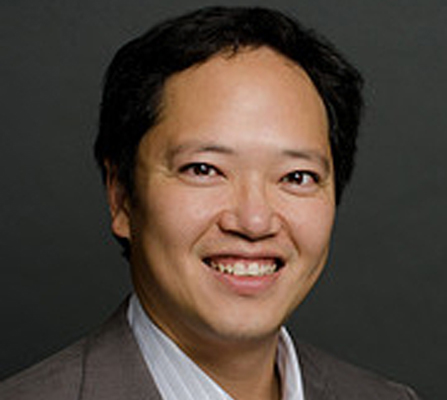
Richard Tsai, Professor, Oden Institute for Computational Engineering & Sciences
10 – 11AM
Friday Mar 27, 2026
Abstract
Physics-Informed Neural Networks (PINNs) are often framed as a revolutionary "mesh-free" solver, yet they frequently lack the rigorous guarantees expected in Computational Science and Engineering. This talk evaluates PINNs through the lens of numerical analysis, treating them as a form of residual minimization.
We begin by establishing the conditions required to guarantee success for a well-posed initial boundary value problem (IBVP). Through elementary examples, we will examine what happens when these conditions fail and why the resulting optimization landscapes often lead to "loss-function fallacies." In the second half, we demonstrate how classical numerical principles can both reveal these pitfalls and provide superior alternatives. We will discuss two concrete applications: Hamilton-Jacobi Equations: Overcoming the limitations of neural solvers in high-dimensional viscosity solutions. Integral Equations: Efficiently inverting large, dense matrices derived from the quadrature of singular integrals.
The session aims to provide graduate students with a framework for identifying when to trust neural solvers and how to leverage classical theory to build more robust computational tools.
Biography
Richard Tsai received his PhD. in Mathematics in 2002 from UCLA. He was a Veblen Instructor at Princeton University and the Institute for Advanced Study before joining UT. Richard was born in Taiwan and has lived in the United States since 1997.
Richard's current focus is on developing machine learning approaches that complement the more classical techniques for challenging scientific computing tasks. The types of scientific computing problems are multiscale coupling algorithms for initial value problems, nonlinear interface dynamics, partial differential equations on surfaces, multiscale modeling, wave propagation, image processing, sensor networks, robotic path planning problems.
Event information
Friday Mar 27, 2026